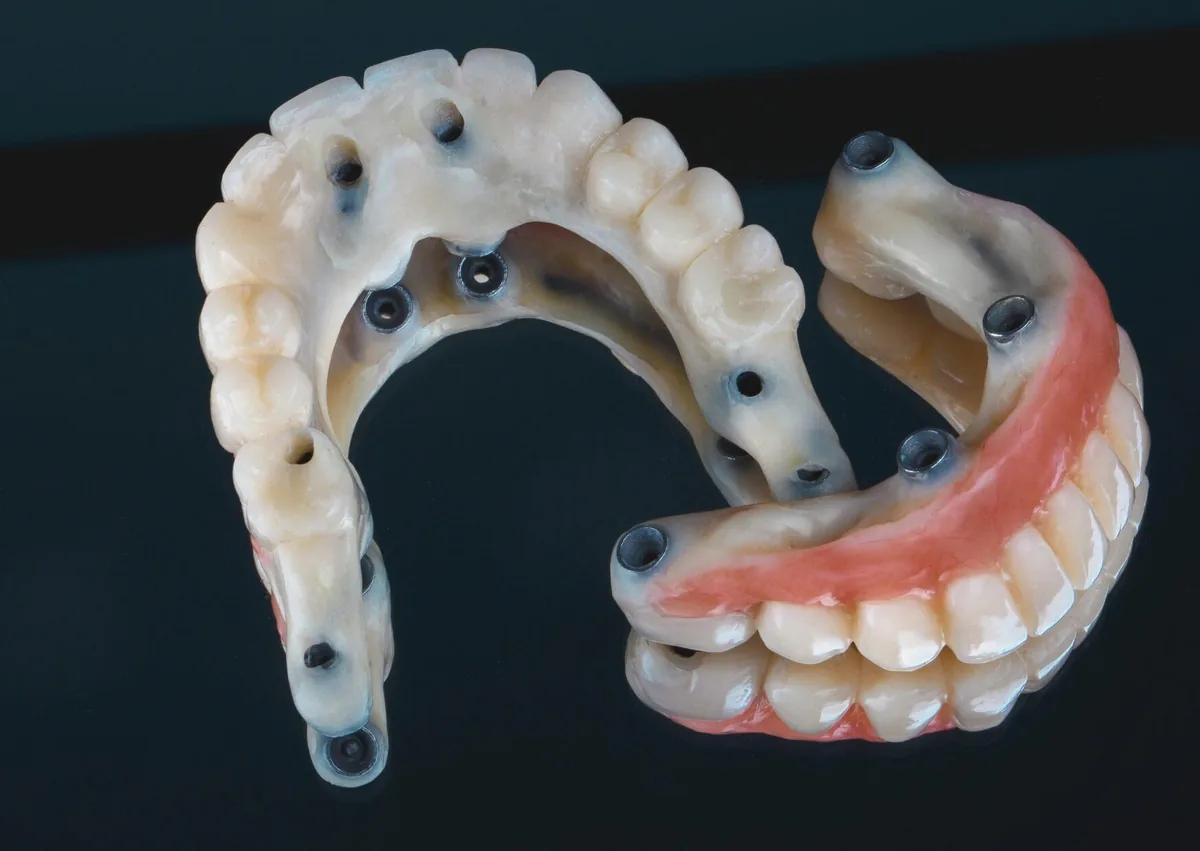
The cost of full mouth dental implants often ranges from about $20,000 to $50,000 per arch in the United States. Replacing both arches may cost about $40,000 to $100,000 or more, depending on the number of implants, the type of teeth attached, bone condition, preparatory treatment, sedation, and local fees.
If you're worried about the cost of replacing all your teeth, dental implants can offer a more stable, natural-feeling long-term solution than traditional dentures. At Northwest General Dentistry in Houston, TX, we help patients compare treatment paths, expected costs, and healing timelines in a clear, practical way.
Full mouth implant treatment replaces all or nearly all teeth in the upper jaw, lower jaw, or both. In most cases, several implants support a full arch of replacement teeth instead of placing one implant for every missing tooth.
A quoted fee may include the implants, abutments, temporary teeth, the final prosthesis, surgical visits, and follow-up care. Some estimates do not include imaging, extractions, bone grafting, anesthesia, or future repairs.
That is why it helps to ask for a written, itemized treatment estimate. It is also smart to confirm what imaging was used for planning, such as dental x-rays.
An implant-supported removable denture, often called an overdenture, snaps onto implants but can be removed for cleaning. It usually costs less than a fixed bridge and often feels more secure than a traditional denture.
This option can still need maintenance, such as replacing attachment parts or relining the denture over time. Many patients exploring a removable option compare implant dentures for better daily comfort and retention.
A fixed full-arch bridge attaches to multiple implants and stays in place unless a dental professional removes it. It usually feels more like permanent teeth, but it often costs more because of the planning, components, lab work, and restorative materials involved.
If some healthy teeth can still be saved, individual implants and crowns may be worth considering. In select cases, a single tooth implant is the more conservative choice, and some patients may also compare dental bridges when appropriate.
The number of implants used is one of the biggest cost factors. Some full-arch cases use four implants, while others need more based on bone anatomy, bite forces, and restoration design.
Preparatory treatment can also raise the total. Extractions, bone grafting, or sinus augmentation may be needed when damaged teeth remain or bone volume is limited.
Materials matter too. Acrylic teeth often cost less upfront, while zirconia and other premium materials may cost more and offer different benefits in strength, appearance, weight, and wear.
Geographic location, clinician experience, sedation choices, and digital planning can also affect the final price. A lower quote is not always the better value if it leaves out temporary teeth, follow-up visits, or complication management.

Implant-supported teeth can improve chewing, speech, confidence, and day-to-day comfort compared with loose conventional dentures. They also help preserve bone around the implant sites, though they do not stop every age-related change in the jaws.
Fixed teeth are convenient because they stay in place. However, they require careful cleaning underneath with floss threaders, small brushes, or a water flosser.
Removable implant dentures are easier to take out and clean, and they may cost less. Still, they usually do not feel as close to natural teeth as a fixed bridge.
Neither option is maintenance-free. Regular exams, cleanings, bite checks, and occasional repairs help protect the long-term result.
Implant placement is usually done with local anesthesia, and sedation may be available when appropriate. During treatment, patients often feel pressure and vibration rather than sharp pain.
After surgery, soreness, swelling, and bruising are common for several days. The amount varies based on the number of implants placed, whether grafting was needed, and individual healing patterns.
Some patients can receive temporary teeth the same day their implants are placed. Same-day temporary teeth are not guaranteed, because candidacy depends on implant stability, bone quality, bite conditions, and overall health.
In many cases, implants need several months to integrate with the jawbone before the final teeth are delivered. During healing, the dental team may recommend a softer diet and specific cleaning steps to protect the implants.
Severe or worsening pain, heavy bleeding, fever, spreading swelling, trouble breathing, trouble swallowing, or a suddenly loose restoration needs prompt professional attention. Trouble breathing or swallowing requires emergency care.
Dental insurance may help with parts of treatment, such as exams, extractions, dentures, or related restorative care. Many plans still limit or exclude implant coverage.
Medical insurance may sometimes contribute when tooth loss is tied to a covered injury or medical condition, but approval is not automatic. Patients should request written benefit details before starting treatment.
Payment may be easier to manage through financing options, health savings accounts, flexible spending accounts, or phased treatment. It is important to review interest, fees, repayment terms, and tax rules instead of focusing only on the monthly payment.
When comparing estimates, ask whether each one includes imaging, surgery, grafting, anesthesia, temporary teeth, final teeth, lab fees, follow-up care, and warranty terms. It also helps to ask who performs each stage and what maintenance is expected later.
A full evaluation usually includes a review of your medical and dental history, gum health, bite, and imaging when needed. Smoking, uncontrolled diabetes, active gum disease, certain medications, and teeth grinding can affect healing and long-term risk.
A local dentist or implant team can explain whether a fixed bridge, removable implant denture, conventional denture, or another plan best fits your mouth, goals, and budget. Bringing questions and any outside estimates to the visit can make the discussion more useful and less stressful.
To get an accurate, itemized estimate and a personalized plan, arrange a consultation with the implant team so imaging and a thorough exam can address bone, materials, and anesthesia needs. Northwest General Dentistry focuses on dental implants in Houston, TX; call (281) 856-6300 to schedule your visit.
A full arch often uses four to eight implants, but the right number depends on anatomy, bone quality, bite forces, and restoration design. Replacing both arches may involve eight or more implants in total.
They often are when an entire arch needs replacement because several implants can support one connected bridge. The comparison changes if healthy teeth can still be preserved, so removing restorable teeth just to simplify treatment may not be the best choice.
Implants can last for many years with healthy gums, good home care, and regular professional maintenance. The attached teeth and smaller parts may wear, chip, loosen, or need replacement sooner than the implants themselves.
Implants and temporary teeth can sometimes be placed in one visit, but planning happens beforehand and healing continues afterward. The final teeth are usually delivered after the implants integrate and the tissues stabilize.
Original Medicare usually does not cover routine dental implants. Some Medicare Advantage plans or limited medically necessary situations may offer benefits, so patients should confirm coverage directly with their plan.