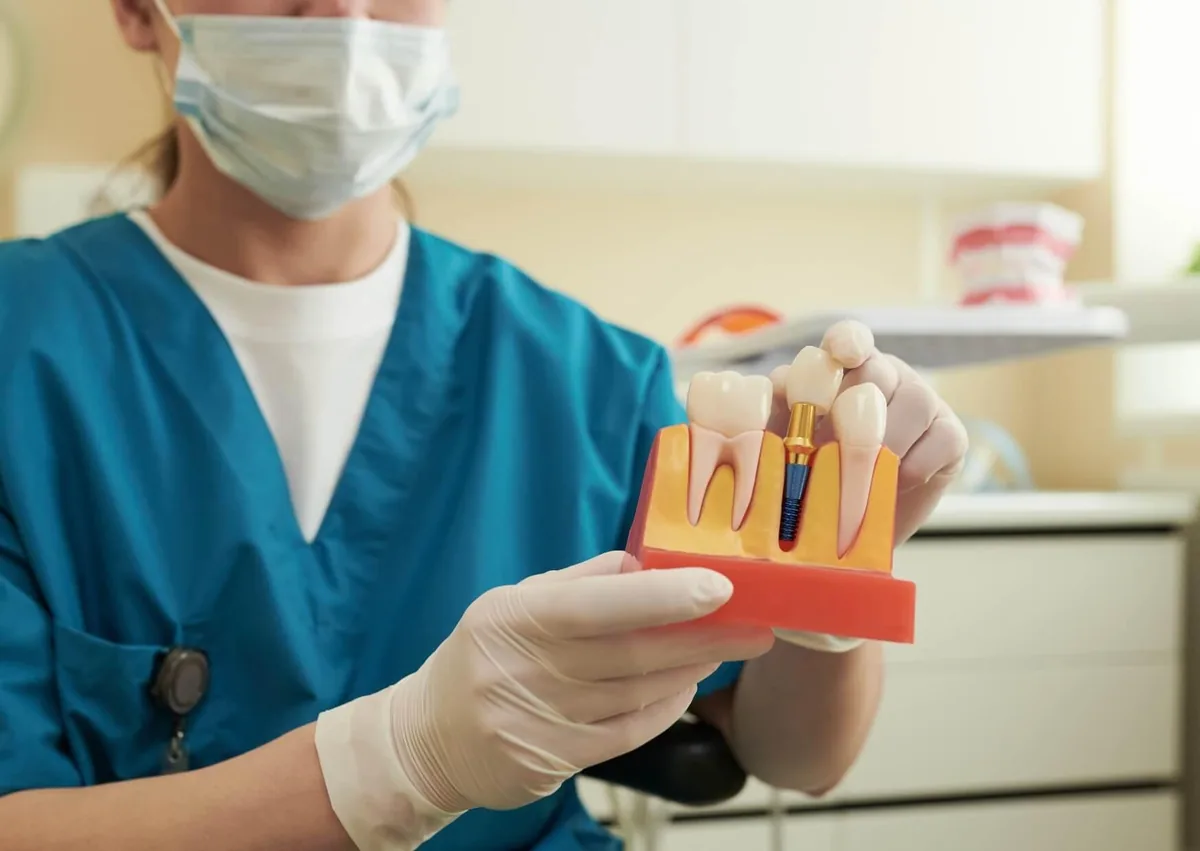
A single tooth implant usually takes about three to nine months from evaluation to final crown. The implant procedure itself may take only one to two hours for one tooth, but most of the timeline is spent on planning and healing.
Some patients can have an implant placed the same day as a tooth extraction. Others need healing time, a bone graft, or both first, so an exam and dental x-rays are the best way to get a realistic estimate.
If you're deciding how to replace a missing tooth and want a clear sense of timing and outcomes, dental implants can provide a durable, natural-feeling option tailored to your needs. Northwest General Dentistry in Houston, TX provides patient-centered care and clear timelines so you can plan treatment around work and family life.
Most implant treatment includes four main phases: evaluation, implant placement, healing, and the final crown. A dental implant is a small post, usually titanium, that replaces the missing tooth root and supports the new tooth above it.
|
Treatment Stage |
Common Time Frame |
What Happens |
|---|---|---|
|
Exam and planning |
One or more visits |
The dentist reviews your health history, examines the area, and takes imaging |
|
Extraction, if needed |
One visit |
The damaged tooth is removed, sometimes on the same day as implant placement |
|
Bone graft, if needed |
Often 3 to 6 months of healing |
Bone material is added to improve support for the implant |
|
Implant placement |
About 1 to 2 hours for one implant |
The implant is placed into the jawbone |
|
Implant healing |
Commonly 2 to 6 months |
The bone bonds to the implant |
|
Abutment and crown |
Usually 2 or more visits |
The connector and custom replacement tooth are completed |
These time frames are averages, not guarantees. The tooth location, bone quality, gum health, medical history, and treatment plan all affect how long the process takes.
The longest part of treatment is usually healing. During this stage, osseointegration occurs, which means the jawbone gradually bonds to the implant surface.
That bond is what gives an implant its long-term stability. Your dentist waits until the implant is secure before placing the final crown so it can handle normal chewing forces more predictably.
Healing may take longer in the upper jaw because the bone is often less dense there. Smoking or vaping, uncontrolled diabetes, gum disease, teeth grinding, certain medications, and some medical conditions can also increase implant failure risk or slow healing.
If the area is healthy and there is enough bone, an implant may be placed right after an extraction. This can shorten the overall process, but it does not remove the need for several months of healing afterward.
In other cases, the socket needs time to heal before implant placement. Infection, bone loss, thin bone, or soft tissue concerns can make a delayed approach safer and more predictable.
A bone graft may be recommended if the jaw needs more support. Smaller grafts can sometimes be done at the same time as implant placement, while larger grafts often need a separate healing period first.
Same-day implant treatment can mean two different things. It may mean the implant is placed on the day the tooth is removed, or it may mean a temporary tooth is attached soon after surgery.
It usually does not mean the permanent crown is finished in one day. Even with a faster treatment path, the implant still needs time to heal and integrate with the bone.
|
Approach |
Potential Benefit |
Important Limitation |
|---|---|---|
|
May shorten treatment and reduce surgical visits |
Requires favorable bone and tissue conditions |
|
|
Immediate temporary tooth |
Helps preserve appearance during healing |
Usually must be protected from heavy biting |
|
Delayed implant placement |
Allows infection, bone, or soft tissue to heal first |
Extends the overall timeline |
|
Removable temporary tooth |
Can fill the visible space during healing |
May feel less natural than a fixed tooth |
For a front tooth, a temporary restoration can often help maintain your smile during healing. The right option depends on implant stability, bite pressure, gum shape, and the condition of the surrounding bone.
Implant placement is usually done with local anesthetic, so the area should feel numb during treatment. Some patients may also be candidates for sedation, depending on the procedure and their needs.
You may notice pressure or vibration, but sharp pain is not expected when the area is fully numb. After the procedure, mild to moderate soreness, swelling, bruising, and minor bleeding are common for a few days.
Many people return to normal nonstrenuous activities within a day or two. Recovery may take longer if you had an extraction, grafting, or more than one implant placed.
Follow your dentist's instructions for eating, cleaning the area, activity, and medications. Contact the office if pain or swelling gets worse instead of better, bleeding continues, fever develops, pus appears, or the implant or temporary tooth feels loose.
Trouble breathing or swallowing, rapidly spreading swelling, or uncontrolled bleeding needs urgent medical care. Those symptoms are not typical and should not wait.
The process can be fairly short when the site is healthy and ready for an implant. It can take much longer when treatment includes major grafting, sinus augmentation, multiple implants, gum disease treatment, or staged healing.
Timelines also differ for larger restorations such as implant dentures. Full-arch treatment often follows a different sequence than replacing one missing tooth.
Several practical factors can affect the schedule:
Keeping follow-up visits helps your dentist confirm healing before moving to the next step. Good home care and avoiding tobacco can also support a smoother recovery.
Once the implant is stable, the dentist takes the records needed for the crown. An abutment, which connects the implant to the crown, may be placed during the original surgery or at a later visit.
The final crown is made to fit your bite and blend with nearby teeth in shape and color. Small adjustments may be needed so the new tooth feels comfortable and does not take too much force.
With proper care, an implant-supported tooth can feel stable and natural while protecting neighboring teeth from being altered for support. The crown may need replacement over time from wear, while the implant itself may last much longer if the surrounding tissues stay healthy.

The most accurate timeline comes after a dentist examines the area, reviews your bite and gum health, and evaluates the bone in three dimensions. Bring an updated medication list and share any history of diabetes, osteoporosis treatment, radiation therapy, bleeding disorders, or tobacco use.
A consultation can show whether you need extraction, grafting, a temporary tooth, or a staged approach. Even when treatment takes several months, much of that time is quiet healing rather than repeated procedures. That is why a personalized plan matters more than a one-size-fits-all estimate.
To get a personalized implant timeline and a clear next-step plan, call to schedule a consultation that reviews imaging and treatment options. Call Northwest General Dentistry for dental implants in Houston, TX at (281) 856-6300 to arrange a visit and choose the option that fits your goals.
An implant and temporary tooth can sometimes be placed in one day. The permanent crown is usually placed later, after the implant has healed and become stable.
Many patients do not have to leave a visible gap. Depending on the location and treatment plan, you may have a removable temporary tooth, a bonded temporary, or a temporary crown on the implant.
Not always. A small graft may be done at the same time as implant placement, while a larger graft often needs its own healing period first.
Most patients start with softer foods and avoid chewing hard foods on the implant area early on. Your dentist will tell you when it is safe to return to a more normal diet based on your healing and treatment plan.
In some cases, an implant does not bond to the bone as expected. The dentist may remove it, allow the area to heal, address contributing factors, and discuss whether another implant or a different tooth replacement option makes more sense.