
To remove plaque from teeth, brush twice a day with fluoride toothpaste, clean between your teeth once a day, and keep up with professional cleanings as your dentist recommends. Soft plaque can usually be removed at home, but hardened plaque, called tartar, needs professional removal.
Plaque is a sticky film of bacteria that forms throughout the day, especially along the gumline and between teeth. If it stays on the teeth, it can lead to cavities, bad breath, irritated gums, and eventually gum disease.
If you’re concerned about persistent plaque, hardened tartar, or ongoing gum irritation, general dentistry can determine whether routine cleanings or deeper periodontal care is needed. Northwest General Dentistry in Houston, TX provides gentle, evidence-based cleanings and personalized prevention plans to reduce recurrence and protect your teeth and gums.
Brush for two minutes twice a day with a soft-bristled manual or electric toothbrush. Angle the bristles toward the gumline and use gentle circular motions on the front, back, and chewing surfaces of each tooth.
Use fluoride toothpaste, then spit out the excess after brushing. Avoid scrubbing hard, since extra pressure does not remove more plaque and can irritate the gums or wear down tooth surfaces.
Clean between your teeth once a day with floss, interdental brushes, or another device your dentist recommends. Floss often works best for tight spaces, while interdental brushes can be easier around wider gaps, bridges, or braces.
A water flosser can help rinse away debris and disrupt plaque around orthodontic appliances, implants, and dental work. It works best as a helpful addition when recommended for your specific needs, not as a full replacement for brushing and between-teeth cleaning.
Plaque is usually soft, sticky, and pale or colorless. Tartar, also called dental calculus, forms when plaque hardens after absorbing minerals from saliva, often near the gumline or behind the lower front teeth.
|
Buildup |
Typical Appearance |
Safe Removal Method |
|---|---|---|
|
Plaque |
Soft or sticky film |
Brushing and interdental cleaning |
|
Tartar |
Hard, rough, yellow, tan, or dark deposit |
Professional scaling |
|
Surface stain |
Discoloration from coffee, tea, tobacco, or similar sources |
Professional polishing or other dentist-guided care |
Do not try to scrape tartar off at home with household items or do-it-yourself dental instruments. These at-home tools can cut the gums, scratch enamel or restorations, and push buildup farther below the gumline.
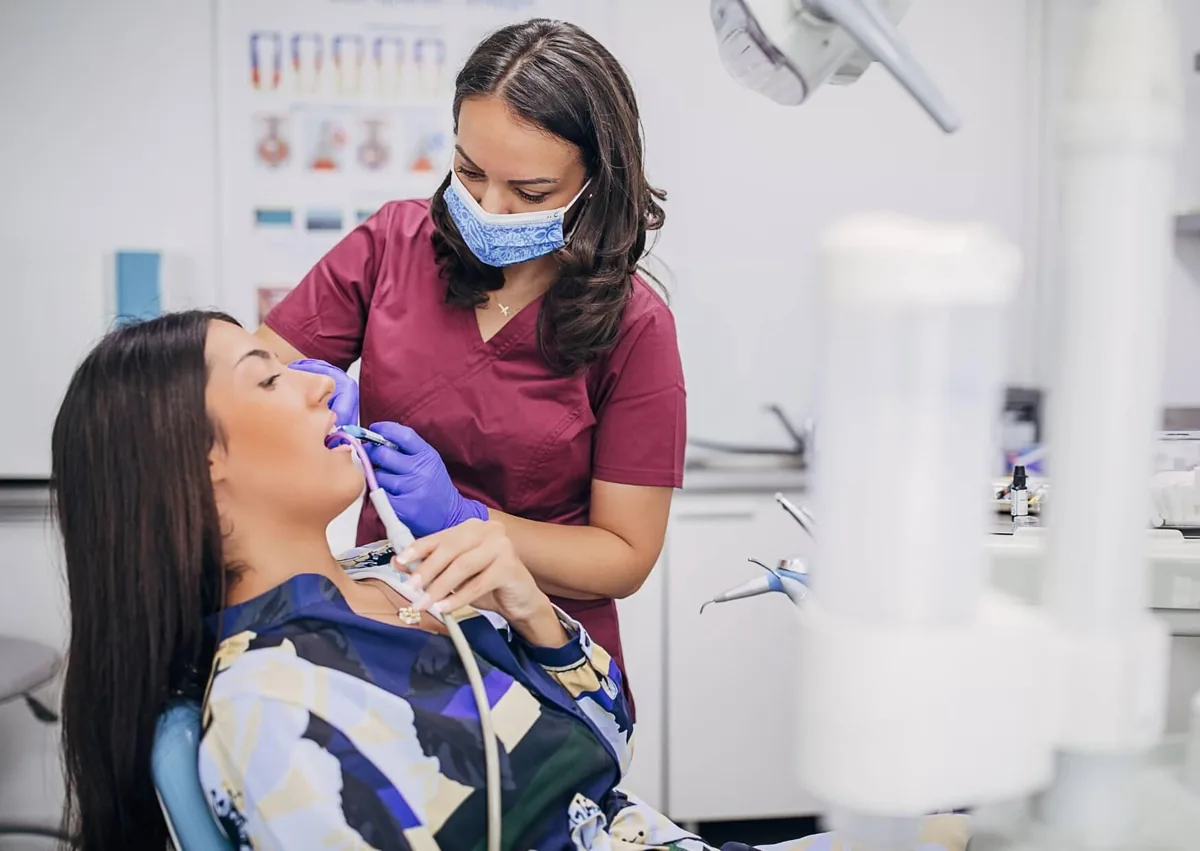
During a professional teeth cleaning, a dental professional uses hand instruments or an ultrasonic scaler to remove plaque and tartar above and slightly below the gumline. The teeth may then be polished to smooth the surfaces and reduce certain surface stains.
Most people feel pressure, vibration, water spray, or light scraping during a routine cleaning. Cleanings are often comfortable, but tender gums or sensitive teeth can make some spots more noticeable, and the dental team can adjust treatment for comfort.
If buildup extends deeper below the gums and there are signs of periodontal disease, scaling and root planing may be recommended. A dentist can discuss gum disease treatment options when periodontal disease is suspected.
This deeper treatment is different from a routine cleaning and is usually done with local anesthetic. It may be completed over more than one visit, depending on how much buildup and inflammation are present.
Plaque starts forming again soon after it is removed, so daily consistency matters more than brushing harder. Replace your toothbrush or electric brush head about every three to four months, or sooner if the bristles look frayed.
Pay close attention to areas that trap plaque, such as crowded teeth, the gumline, braces, bridges, implants, and the edges of crowns. A dentist or hygienist can show you which brush or interdental tool fits those areas best.
Sugary or acidic snacks and drinks can raise cavity risk because bacteria produce acids after feeding on carbohydrates. Water is a better everyday choice, and mouthwash should be seen as an extra step rather than a substitute for brushing and cleaning between teeth.
Preventive options such as dental sealants can help protect the chewing surfaces of back teeth where plaque and food often collect. That added protection can lower the risk of cavities in those harder-to-clean areas.
Schedule a dental evaluation if hard deposits remain after brushing, your gums bleed often, bad breath does not improve, or your gums look swollen or start pulling away from the teeth. Loose teeth, pus near the gums, bite changes, or worsening pain also need prompt attention.
Seek urgent dental or medical care for facial or jaw swelling that is getting worse, fever with dental swelling, trouble swallowing or breathing, uncontrolled bleeding, or severe symptoms that are spreading. Those signs are not typical plaque concerns and should not be managed with home care alone.
A local general dentistry practice can tell whether the buildup is soft plaque, hardened tartar, stain, or another issue. With the right home care and professional support, plaque control is usually very manageable and can protect both your oral health and your smile.
If tartar remains or your gums bleed despite home care, the next step is a professional evaluation and cleaning to prevent progression and address sensitivity. Contact Northwest General Dentistry for general dentistry care in Houston, TX at (281) 856-6300 to schedule an exam and appropriate cleaning.
Most soft plaque can be disrupted with one thorough brushing and between-teeth cleaning session. Plaque starts forming again quickly, and any tartar will still need professional removal.
Some fluoride toothpastes contain baking soda and can help clean plaque and surface stains. Homemade mixtures may be abrasive or may not contain cavity-protective fluoride, so a toothpaste with the American Dental Association Seal of Acceptance is usually the better choice.
No. Some mouthwashes may help reduce bacteria or gingivitis, but they do not replace the physical plaque removal that comes from brushing and cleaning between the teeth.
Bleeding often happens when plaque has irritated the gums. Brushing too hard or flossing incorrectly can also contribute, so keep cleaning gently and schedule a dental visit if bleeding continues or gets worse.
The right schedule depends on your gum health, cavity risk, tartar buildup, medical history, and past dental treatment. Many people do well with cleanings every six months, while others need more frequent visits based on a dentist’s evaluation.