Dental bonding usually costs about $300 to $600 per tooth in the United States, though the total can be lower or higher depending on the tooth and the work involved. This average cost is most useful as a starting point, because your final fee depends on how many teeth need treatment, how much reshaping or repair is needed, and whether the procedure is considered cosmetic or restorative.
Bonding is often a practical option for small chips, minor gaps, worn edges, discoloration, or slight shape changes. If a tooth has decay, a crack, or bite-related stress, your dentist may recommend a different treatment instead.
If you’re weighing options for a chipped, stained, or slightly misshapen tooth, dental bonding can be a conservative way to restore both appearance and bite function. Northwest General Dentistry in Houston, TX offers compassionate care and tailored treatment plans to help you get lasting, natural-looking results.
Dental bonding uses a tooth-colored composite resin similar to the material used for white fillings. Your dentist matches the shade, prepares the tooth surface, shapes the resin, hardens it with a curing light, and polishes it to blend with nearby enamel.
If you want a simple procedure overview, see What is tooth bonding. In many cases, bonding is completed in one visit and requires little to no removal of healthy tooth structure.
A quoted fee may include the exam, X-rays, the bonding procedure, and minor follow-up adjustments. Since offices bill differently, it helps to ask for a written estimate that shows which items are included.
Several factors can raise or lower the total dental bonding cost:
A small chip on one front tooth usually costs less than reshaping several visible teeth. Teeth that absorb heavier biting pressure may also need more planning to reduce the risk of early chipping.
Insurance may help pay for bonding when it restores a tooth affected by decay, trauma, or another functional problem. Coverage is less common when bonding is done only to change the look of a healthy tooth.
Even when a plan offers benefits, deductibles, annual maximums, waiting periods, and material restrictions may apply. Insurance coverage is not guaranteed, so ask your dental office for a pretreatment estimate and confirm details with your insurer.
Health savings accounts, flexible spending accounts, discount plans, or office payment options may also help with eligible costs. Review any financing terms carefully so you understand interest, fees, and repayment expectations.
Bonding is usually the most affordable option upfront, but the lowest price is not always the best long-term value. The right treatment depends on the amount of healthy tooth structure left, your bite, your cosmetic goals, and how much durability the tooth needs.
|
Option |
Typical Purpose |
Tooth Preparation |
Practical Outcome |
|---|---|---|---|
|
Bonding |
Small chips, gaps, stains, or shape changes |
Usually minimal |
Lower initial cost; may stain or chip over time |
|
Broader cosmetic changes on a front surface |
Usually some enamel removal |
Strong stain resistance and stable color |
|
|
Major damage, weakness, or extensive restoration |
Tooth reshaped on multiple surfaces |
Greater coverage and protection for selected teeth |
Bonding is conservative and repairable, which means it often preserves more natural enamel. Veneers may offer longer-lasting color and a more dramatic cosmetic change, while crowns are usually better for teeth that need more structural support.
If you are comparing options, our cosmetic dentistry overview explains how treatments can work together and what to expect for appearance and longevity.
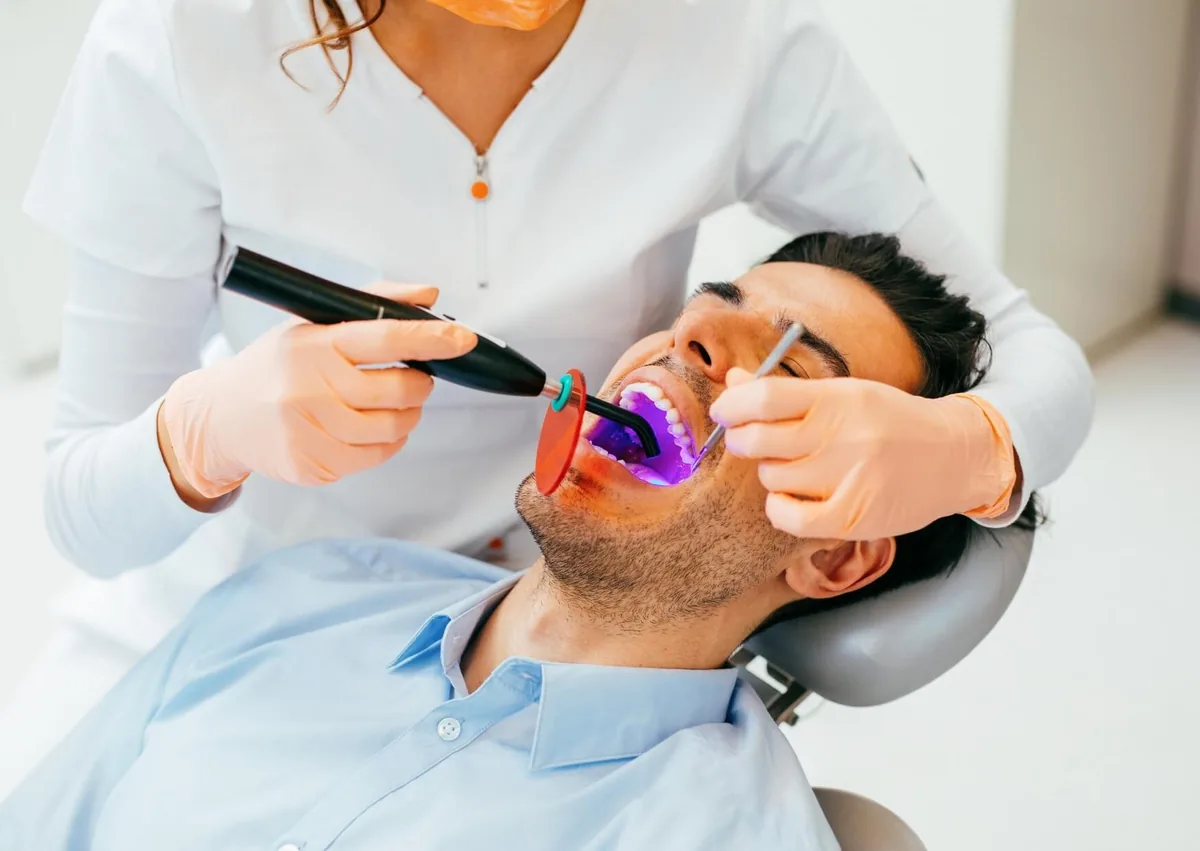
Many bonding procedures are finished in one appointment, often in 30 to 60 minutes per tooth. Numbing may not be needed if the work stays on the outer enamel, but it can help if the tooth is sensitive or decay must be removed.
Results are immediate, and most patients return to normal activities the same day. You may notice mild sensitivity or a bite that feels slightly off at first, and your dentist can adjust that if needed.
Bonding material does not whiten with bleaching products. If you are also considering whitening, it is often best to do that first so the resin can be matched to your final tooth shade.
Bonding can last for several years, but there is no fixed timeline. Longevity depends on the size and location of the bonding, your bite, oral hygiene, diet, and habits like nail biting, chewing ice, or using teeth as tools.
The resin can stain, lose polish, or chip over time, especially on the edges of front teeth. Repairs are often simpler and less expensive than full replacement, but future maintenance is still worth considering.
If long-term durability is a top concern, compare bonding with porcelain by reading about how long veneers last. That can help you weigh lower upfront cost against possible maintenance later.
Brush twice a day with fluoride toothpaste, clean between your teeth daily, and keep regular dental visits. If you grind or clench, your dentist may recommend a custom night guard to protect both the bonding and your natural teeth.
The best way to get a reliable estimate is with an in-person exam. Your dentist can evaluate the tooth, gums, bite, and nearby restorations, then explain whether bonding is likely to meet both your cosmetic and functional goals.
Seek prompt care if you have severe pain, swelling, fever, uncontrolled bleeding, or a tooth that feels loose after an injury. A large fracture, deep crack, or exposed inner tooth tissue may need urgent treatment rather than cosmetic bonding.
Bring photos if you have a specific smile goal in mind. It is also smart to ask how many teeth may need treatment, what maintenance to expect, and whether alternatives would be more durable or cost-effective.
To confirm a personalized estimate and find out whether bonding is the best solution for your tooth, arrange a short consult and exam. Call Northwest General Dentistry about dental bonding in Houston, TX at (281) 856-6300 to schedule a visit or request an appointment.
Yes, bonding usually has a lower initial cost per tooth than porcelain veneers. However, veneers may resist staining better and last longer in the right cases, so long-term maintenance also matters.
Bonding often works well for a small or moderate chip when enough healthy tooth structure remains. A deep fracture, significant pain, or damage below the gumline may call for a different restoration or additional treatment.
Bonding usually requires little or no removal of healthy enamel, which makes it one of the more conservative cosmetic options. Some surface conditioning is still needed so the resin can attach securely.
Yes, bonding can often be polished, repaired, replaced, or removed by a dentist. The best option depends on how the tooth was prepared and whether the underlying enamel is still healthy.
Office overhead, local market conditions, material costs, and dentist experience can vary from one region to another. In many cases, though, the complexity and purpose of treatment have an even bigger effect on the final total.